


Truckload• Intermodal Transportation• Logistics & Supply Chain• Freight Broker• Logistics Service Provider• Freight Forwarder
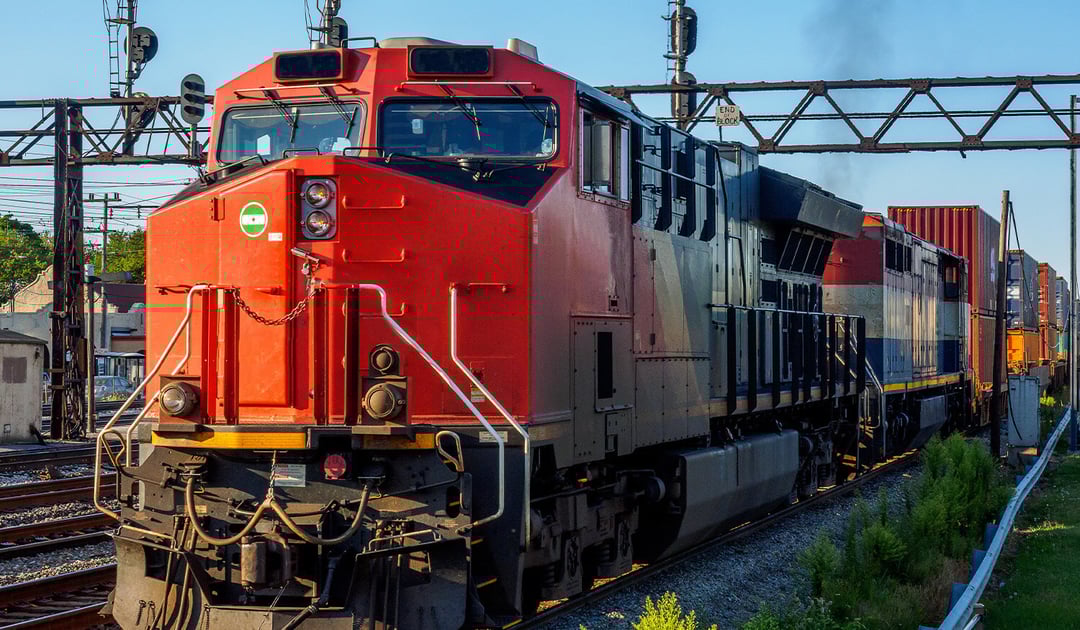
A Lane-by-Lane Evaluation Guide for Mileage, Density, and Rail-Network Criteria
One of the most common questions shippers ask when considering a switch from truckload to intermodal is simple:
"Which of my lanes are actually a good fit for intermodal?"
It's a fair question and one that has a much more precise answer today than it did even a few years ago. Intermodal is not a mode you "try everywhere." It succeeds when the lane characteristics match the strengths of the railroad network, drayage capacity, and transit expectations.
Shippers who choose the right lanes see:
- Lower transportation cost (typically 10-30% savings versus truckload)
- More stable long-term pricing
- Competitive transit times
- Lower carbon emissions
- Fewer capacity constraints during tight markets
- Better network resilience
Shippers who choose poor-fit lanes often walk away thinking intermodal doesn't work, which is almost always a lane-selection problem, not a mode problem. This guide breaks down how shippers can evaluate their network lane-by-lane to determine where intermodal delivers the strongest results.
The four pillars of a strong intermodal lane
There are four primary criteria that determine whether intermodal will work for a given lane:
- Mileage: How far is the freight traveling?
- Density: Is the lane high-volume and repetitive?
- Rail Network Alignment: Does the lane align well with class 1 routes?
- Drayage Feasibility: Are both origin and destination close to strong dray markets?
If a lane checks all four, it is almost certainly a great intermodal candidate.
If it checks two or three, it may still be viable with the right Intermodal Marketing Company (IMC).
If it checks one or zero, it's generally not a good fit...and that's okay.
Knowing where intermodal doesn't fit is just as valuable as knowing where it does. Let's dig deeper into each intermodal pillar.
1. Mileage: The First and Most Important Filter
The Sweet Spot: 700+ Miles
As a rule of thumb, intermodal delivers its best price-to-service ratio on lanes that are 700 miles or longer.
The ideal range is typically 900–2,200 miles, though lanes over 2,200 miles can also be excellent (for example, Pacific Northwest or Southern California to the East Coast).
Why does mileage matter so much?
Because intermodal's cost structure is optimized around long-haul rail economics. The longer the distance, the more the cost advantage widens versus truckload. Rail moves freight more efficiently over distance than trucks, and that efficiency compounds as miles increase.
Shorter Hauls Can Work… When Conditions Are Right
Lanes under 700 miles can still work if:
- They have extremely strong rail frequency
- Highway congestion consistently slows truck transit
- The drayage legs are very short (no more than 25 miles on either end of the rail linehaul)
But in most cases, routes under 600 miles are not ideal unless they're port-connected or part of a dense high-frequency rail corridor.
Why Truckload Wins on Shorter Lanes
On lanes under 500 miles without port connections, truckload typically offers:
- Faster and more predictable transit
- Simpler operations with fewer handoffs
- Competitive pricing due to shorter driver runs
- Greater flexibility for appointment scheduling
There's no shame in keeping short-haul freight on trucks. The goal is to use intermodal where it fits, not force it where it doesn't.
2. Lane Density: High Volume = High Reliability
Intermodal is a network-dependent mode. Lanes with higher and more predictable volume deliver better consistency and lower cost.
High-Density Lanes Perform Best When They Offer:
- Multiple loads per week (the more, the better)
- Consistent demand year-round
- Predictable production or replenishment cycles
- Ability to run roundtrip or triangulation moves
Why Does Density Matter?
High-density lanes allow IMCs to:
- Negotiate better pricing with railroads and dray carriers
- Secure more reliable drayage capacity
- Reduce empty dray miles (which lowers cost)
- Improve on-time performance
- Build standard operating procedures specific to the lane
- Offer service-level commitments with confidence
What About Low-Volume Lanes?
Intermodal can still work on:
- 1–3 loads per week
- Seasonal lanes with predictable patterns
- Project freight with sufficient lead time
But the challenges increase:
- Dray costs per load rise
- Fewer consolidation opportunities
- Less predictability in service levels
- Higher risk of accessorials during peak periods
If you ship a lane only a few times per year, intermodal is usually not a fit. The setup cost and operational complexity outweigh any potential savings.
3. Rail Network Alignment: The Make-or-Break Factor
Even if a lane has the right mileage and density, it must also align with the rail network.
Intermodal is strongest where class 1 railroads already have:
- Frequent service (daily or near-daily departures)
- High-volume intermodal trains
- Direct routes without multiple interchanges
- Strong terminal infrastructure
- Mature drayage markets at both ends
Strong Intermodal Corridors in North America
West Coast to Midwest (BNSF & UP)
- Los Angeles ↔ Chicago
- Oakland ↔ Chicago
- Seattle/Tacoma ↔ Chicago
- Los Angeles ↔ Dallas
- Los Angeles ↔ Kansas City
(… let’s just add any Los Angeles route into a major distribution city in the US.)
These are some of the most reliable and cost-effective intermodal lanes in North America.
Midwest to Northeast (NS & CSX)
- Chicago ↔ Northern New Jersey
- Chicago ↔ Harrisburg
- Columbus ↔ New Jersey
- Detroit ↔ New Jersey
These lanes offer excellent rail frequency and dense dray markets on both ends.
Southeast to Midwest
- Atlanta ↔ Chicago
- Savannah ↔ Chicago
- Charleston ↔ Chicago
- Memphis ↔ Chicago
Port-driven and manufacturing-driven traffic makes these lanes strong performers.
Cross-Border US–Mexico
- Monterrey ↔ Dallas / Chicago
- Mexico City ↔ Chicago
- Guadalajara ↔ Los Angeles
And any freight moving between major distribution and / or port cities in the US.
Furthermore, intermodal is becoming a mainstream choice for northbound and southbound cross-border freight, offering significant savings over long-haul trucking.
But cost savings are only part of the story. For cross-border freight, intermodal isn't just a good option, it's the superior option. The obstacles involved with using trucks across the border are difficult to overcome, while intermodal offers a streamlined, predictable alternative.
Why Cross-Border Intermodal Is Far Superior to Truck:
- No border crossing lines: Intermodal containers bypass the congestion that trucks face at border crossings, avoiding hours or even days of delays.
- Pre-clearance: Freight is cleared before arrival, allowing containers to stay in constant motion without stopping for customs processing.
- No driver hours-of-service (HOS) issues: Rail doesn't have HOS restrictions, eliminating the delays caused by mandatory driver rest periods on long-haul routes.
- No driver changeover complications: Truck shipments often require Mexican drivers to hand off to U.S. drivers (and vice versa) at the border. Intermodal eliminates this handoff entirely for the linehaul portion.
- No cabotage restrictions: U.S. trucking regulations limit what foreign drivers can do once they cross the border. Intermodal avoids this complexity completely.
- Reduced theft risk: Containers on rail are far less vulnerable to cargo theft than trucks sitting in border queues or overnight lots.
- More predictable transit times: Without border delays, driver changes, and HOS resets, intermodal delivers more consistent and reliable transit.
- Lower carbon footprint: Rail produces approximately 75% fewer emissions than trucks, making intermodal the more sustainable choice for cross-border freight.
- Scalable capacity: During peak periods or supply chain surges, intermodal can absorb volume more easily than trucking, which faces chronic driver shortages on both sides of the border.
For shippers moving freight between the U.S. and Mexico, intermodal should be the default, not the alternative.
Weaker Rail Corridors
Some lanes are less ideal for intermodal:
- Short, low-frequency corridors
- Routes requiring multiple rail interchanges (adds transit time and variability)
- Low-volume terminals with limited dray capacity
- Markets with seasonal weather challenges (Northern Plains in winter)
Intermodal can still work on these lanes, but the reliability risks increase, and the savings may not justify the complexity.
New Lane Opportunities in 2025-2026
The competitive reshuffling triggered by the UP-NS merger discussions has created new lane options that didn't exist even six months ago. BNSF-CSX partnerships, new ramp pairings, and expanded services are opening up corridors that were previously truck-only territory.
If you haven't evaluated your network for intermodal in the past couple of years, it may be worth looking again. The landscape is changing.
4. Drayage Feasibility: The Silent Deal Breaker
Drayage services, which describe the trucking legs at each end of an intermodal move, are where most intermodal exceptions originate. You can have perfect mileage, strong density, and excellent rail alignment. But if the drayage doesn't work, the lane doesn't work.
Great Lanes Have:
- Origin and destination within 15–50 miles of a rail ramp
- Strong local dray carrier availability
- No extreme congestion or appointment restrictions
- Good chassis availability
- Predictable pickup and delivery requirements
Warning Signs of Drayage Trouble
A lane may not be a good fit if:
- Either end is 60+ miles from a ramp as dray costs erode savings (but don’t shy away from greater dray if the rail linehaul is 90% of the total miles and there is weekly volume on the lane)
- The local market has significant driver shortages
- Delivery windows are extremely tight (under 2 hours)
- There is heavy construction or port congestion affecting terminal access
- Appointment scheduling is rigid or inconsistently followed by receivers
The Hidden Cost of Long Drays
Every mile of dray adds cost. On a 1,500-mile lane, a 20-mile dray on each end is negligible. But if one end requires a 75-mile dray, you're adding significant cost and complexity that may eliminate the intermodal advantage entirely.
Dray challenges don't kill intermodal on their own, but they can quickly erode cost savings and service reliability.
What a Perfect Intermodal Lane Looks Like
A great intermodal candidate will generally have:
| Criteria | Ideal |
|---|---|
| Mileage | 700+ miles |
| Density | 3+ loads per week |
| Rail Alignment | Direct service or mature corridor |
| Dray Distance | 20–40 miles from ramp on both ends |
| Transit Flexibility | Accommodates 1–2 days of variability |
| Freight Type | Non-hazardous, non-extreme temperature |
If your lane checks all these boxes, it's almost guaranteed to perform exceptionally well on intermodal.
What a Marginal Lane Looks Like
A marginal lane typically includes at least one of the following challenges:
- Under 600–700 miles
- Dray distance is 10% or more of the total miles on the shipping freight lane
- Low weekly volume (1 load per week or less)
- Tight delivery windows (same-day or narrow appointments)
- Irregular shipping patterns
- Off-network rail routing requiring interchanges
These lanes can work, but they require the right IMC, careful prioritization, and enhanced communication. Don't write them off entirely - just set realistic expectations.
What a Poor Intermodal Lane Looks Like
A lane is generally not a fit for intermodal when it has:
- Mileage under 500 miles
- Sparse dray capacity at either end
- Extremely tight pickup/delivery windows
- Products requiring high-service temperature control (reefer intermodal exists but has limitations)
- Wide variability in shipping schedule
- Major detours from rail network routes
This doesn't mean intermodal is bad, it just means this particular lane is better suited to truckload.
Knowing where intermodal doesn't fit protects your service levels and prevents frustration. And it's also important to note that the right IMC will help you recognize this and can coordinate truckload solutions for you without requiring extra legwork on the shipper end.
How to Analyze Your Network: A Step-by-Step Process
Here's the exact process the best IMCs use...and shippers can use it too.
Step 1: Pull Your Top 50 Long-Haul Lanes
Sort your freight data by volume and total miles moved. Focus on your highest-spend, highest-volume lanes first.
Step 2: Filter for 700+ Mile Lanes
Remove lanes under 700 miles unless they're port-driven or have other compelling factors.
Step 3: Evaluate Dray Distance
For each remaining lane, identify the nearest intermodal ramps at origin and destination. Aim for 30 miles or less on each end. Flag anything above 50 miles for further analysis.
Step 4: Overlay Rail Network Maps
Check whether your corridor aligns with a class 1 railroad's high-frequency intermodal routes. Look for direct service without multiple interchanges.
Step 5: Review Volume Consistency
Look for lanes with consistent weekly loads. Predictability matters more than raw volume.
Step 6: Identify Service-Sensitive Lanes
Determine which lanes have tighter delivery requirements. These may still work for intermodal but require more careful planning.
Step 7: Assign a Lane Score
Based on the criteria above, score each lane as:
- Green (Ideal): Strong on all four pillars
- Yellow (Conditional): Strong on 2-3 pillars, workable with the right approach
- Red (Poor Fit): Weak on multiple pillars, likely better suited for truckload
Step 8: Pilot with 2–5 Lanes
Intermodal is best validated through structured pilots with clear KPIs.
Don't try to convert your entire network at once.
Start with your best-fit lanes, prove the model, then expand.
Please fill out the following if you'd like us to run InTek's Intermodal Optimizer to identify potential intermodal freight lanes in your supply chain:
Examples of Ideal Intermodal Lanes
These lanes consistently rank among the most reliable and cost-effective in North America:
- Los Angeles → Chicago (core corridor, high frequency, massive volume) - Similarly applies to any Los Angeles freight going to (or coming from) major distribution cities in the US
- Chicago → Northern New Jersey (dense, fast, predictable)
- Dallas → Atlanta (efficient cross-country route)
- Seattle → Chicago (strong PNW routing)
- Monterrey → Dallas (tight cross-border routing)
- Any freight moving between major distribution and / or port cities in the US.
If you're shipping on these lanes via truckload today, you're almost certainly leaving money on the table.
Why Lane Selection Is the Key to Intermodal Success
Intermodal's reputation ... good or bad ... comes down to lane selection.
Shippers who choose lanes aligned with rail strengths experience:
- 95%+ on-time performance
- 10–30% lower cost versus truckload
- Reduced carbon footprint (rail produces 75% fewer emissions than trucks)
- Fewer capacity issues during tight markets
- Predictable, stable service
- Strong long-term contract stability
Shippers who choose weak lanes experience frustration not because intermodal doesn't work, but because the wrong lanes were chosen. The mode isn't broken. The lane selection was.
Common Mistakes Shippers Make When Evaluating Intermodal
Mistake #1: Trying Intermodal on Too Many Lanes at Once
Don't dump your entire network onto intermodal in one move. Start with 2-5 ideal lanes, prove the concept, build operational muscle, then expand.
Mistake #2: Judging Intermodal by a Bad Lane
If you tried intermodal on a marginal lane and had a poor experience, don't write off the mode entirely. Re-evaluate with better lane selection.
Mistake #3: Ignoring Drayage Complexity
The rail portion usually works. Drayage is where service breaks down. Make sure your IMC has strong dray relationships in your origin and destination markets.
Mistake #4: Expecting Truck-Like Flexibility on Day One
Intermodal requires slightly different operational planning than truckload. Give your team time to adjust to the rhythm of ramp cut-off times and transit windows.
Mistake #5: Not Working with an Experienced IMC
A good IMC makes the complexity invisible. They know which lanes work, which dray carriers to use, and how to prevent accessorial surprises. Don't try to figure this out alone.
The Bottom Line: Intermodal Works When Lanes Are Chosen Strategically
Intermodal is not simply a mode...it's a fit-based strategy.
And when the strategy is applied correctly, it becomes one of the most effective long-haul freight solutions available today.
The key is knowing where it fits and where it doesn't. This guide gives you the framework to make that determination with confidence.
Ready to Evaluate Your Lanes?
If you want help evaluating your lanes, designing an intermodal pilot, or scoring your network, InTek Intermodal Logistics can provide a complete lane-by-lane analysis including:
- Lane scoring based on the four pillars
- Dray density mapping for your specific origins and destinations
- Cost comparison versus your current truckload spend
- Transit time modeling with realistic expectations
- Rail network optimization recommendations
- Carbon impact calculations for sustainability reporting
Intermodal works exceptionally well when the lane is a fit.
About InTek Intermodal Logistics
InTek Intermodal Logistics has been helping shippers simplify, save, and increase freight capacity with intermodal since 2007. With roughly 95% of our business dedicated to delivering intermodal solutions across North America, we're not a truckload company that dabbles in intermodal: Intermodal is who we are and what we do.
Ready to explore intermodal for your network? Contact us for a lane analysis or visit our services below to learn more.
- Domestic Freight Services: Intermodal, Truckload
- Transloading Services
- Outsourced Managed Transportation Service Solutions