
Trends in the Intermodal Transportation Spot Rate and Market
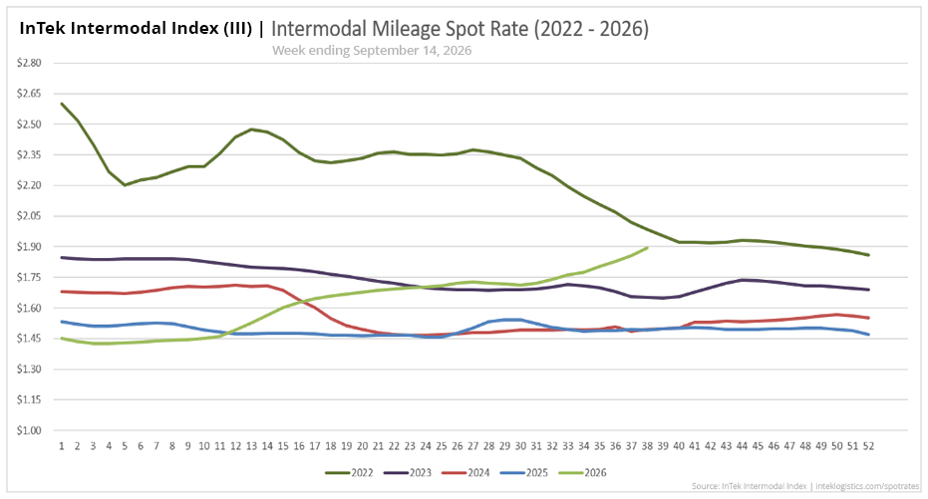
-Jan-15-2026-01-10-49-9253-PM.png?width=734&height=395&name=Intermodal%20Mileage%20Spot%20Rate%20per%20Mile%20(including%20fuel)-Jan-15-2026-01-10-49-9253-PM.png)
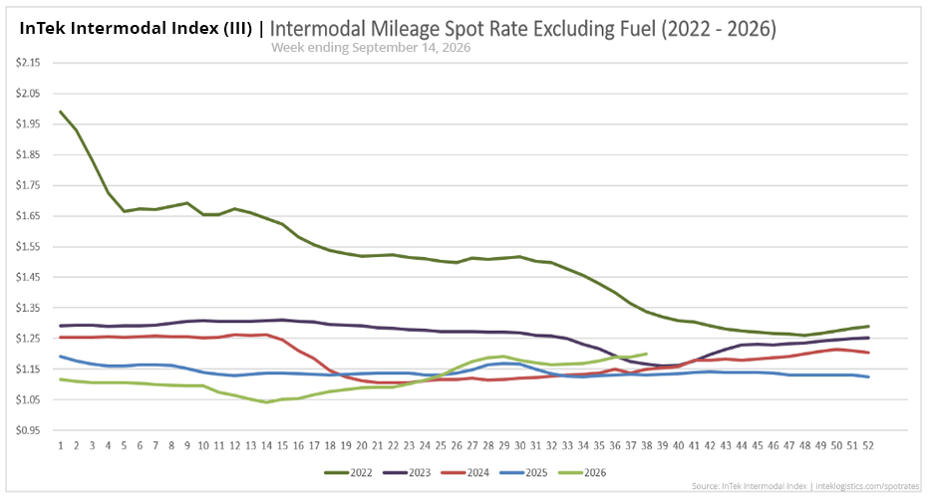
-Jan-15-2026-01-10-49-9572-PM.png?width=734&height=395&name=Intermodal%20Mileage%20Spot%20Rate%20per%20Mile%20(excluding%20fuel)-Jan-15-2026-01-10-49-9572-PM.png)
Domestic Intermodal and Truckload Spot Rates - January 26, 2026
Truckload continued its decline, while intermodal held steady this week.
The truckload surge everyone got excited about? It continues to cool, although we would expect another spike to hit because of this week's weather.
Domestic Intermodal Spot Rate Index (excluding fuel):
- Flat vs. prior week
- Down 4.8% vs. prior year
National Truckload Spot Rate (DAT, excluding fuel): (DAT Trendline Report)
- Down 3.9% vs. prior week
- Up 1.5% vs. prior year
Truckload spot rates continue their January decline, which increases our credibility the late November and December were temporary surges.
Below is a breakdown of what happened in the late November and December truckload market surge:
The tender rejections topped 13% in late December, which was the highest since April 2022. That was meaningful. Carriers were rejecting loads at a pace not seen in years, but there is more to the picture that needs to be understood.
- Compressed holiday window: The calendar created a tighter shipping window this year. Less time between Thanksgiving and Christmas meant freight got concentrated.
- Severe weather: Midwest winter weather and Pacific Northwest flooding disrupted capacity at exactly the wrong time.
- FMCSA enforcement crackdown: The non-domiciled CDL audit is putting real pressure on driver availability. Reports suggest immigration enforcement activity caused many foreign-born drivers to stay off the roads.
- Carrier attrition: The number of carriers leaving the market increased as years of below breakeven rates have slowly squeezed carriers out of the market. The truck population is shrinking.
All of these factors were real. But most were also temporary and now that the holiday window has passed and weather has normalized? Truckload is giving back those gains while a genuine demand catalyst is still missing.
Diesel Fuel
Fuel is worth watching more closely this year.
Prices eased slightly from the prior week, but here's the change from last year: diesel is now running 5% lower than the same period in 2025.
Analysts expect diesel to stay relatively subdued through the first half of 2026, with typical seasonal firming possible in the second half. The forecast is underpinned by strong international oil production and cautious demand from freight-generating sectors.
Key risks include geopolitical disruption and potential refining bottlenecks, especially on the West Coast as California refinery closures tighten regional supply.
For now, fuel isn't the primary friction point in the market equation. But it's no longer providing the tailwind it did in 2025.
Diesel Fuel (EIA):
- $3.62/gallon
- Up $0.09 (2.7%) vs. prior week
- Down $0.04 (1.0%) vs. prior year
(The full spreadsheet of the historical weekly price moves of diesel full can be found at https://www.eia.gov/petroleum/gasdiesel. )
Year-to-Date Intermodal Volume by Region and Railroad vs. 2025
North American Intermodal: -20.0%
United States: -20.5%
Stats by Class I Railroads
- BNSF: 20.1%
- CN: -22.1%
- CPKC: -23.8%
- CSX: -14.6%
- GMXT: 1.9%
- NS: -20.9%
- UP: -29.1%
We're still not taking much stock in the volume numbers, as they are distorted by New Year's and how the weeks align to the prior year (in addition to recent weather). In other words, hold judgment on what the volumes are telling us until these situations work themselves by the end of the month.

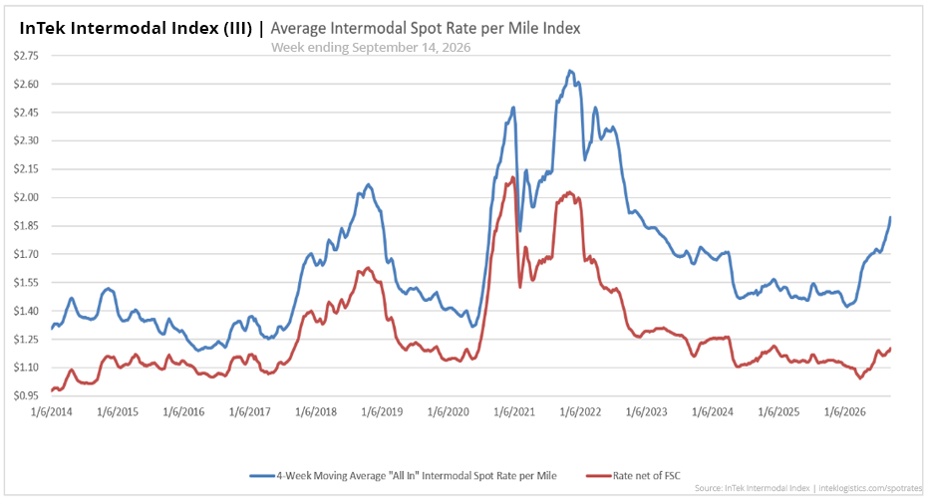
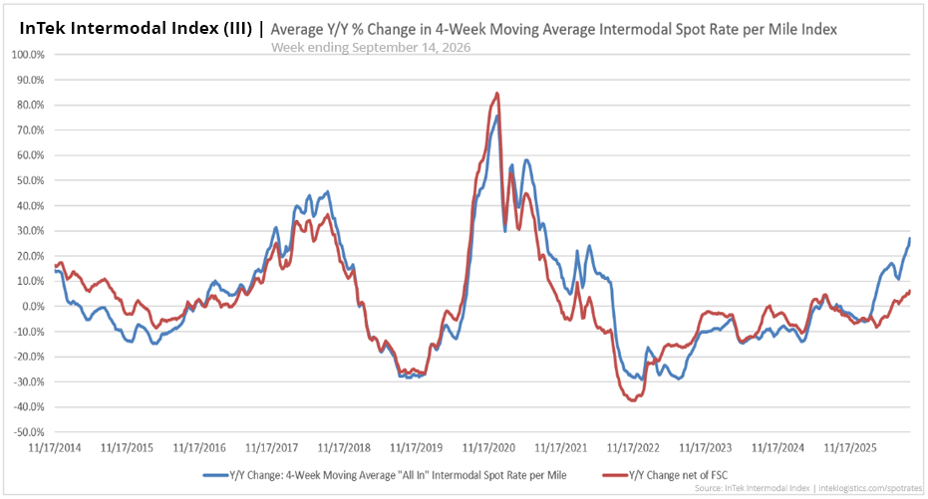
Intermodal Spot Rate Trend Graphs

Want to go deeper on intermodal?
Visit InTek Logistics, read our blog, and listen to the InTek Intermodal podcast as we continue this conversation.
Interested in intermodal or truckload service?
Learn more about 53' domestic intermodal, truckload, cross-border and managed transportation services.