

Truckload• Intermodal Transportation• Logistics & Supply Chain• Freight Broker• Logistics Service Provider• Freight Forwarder
One of the most common questions shippers ask when evaluating intermodal providers is whether the company owns the assets involved in the move. It's a natural question, especially for shippers coming from truckload, where the asset vs non-asset distinction is straightforward: either the carrier owns the truck and employs the driver, or a broker arranges the move through someone else's equipment.
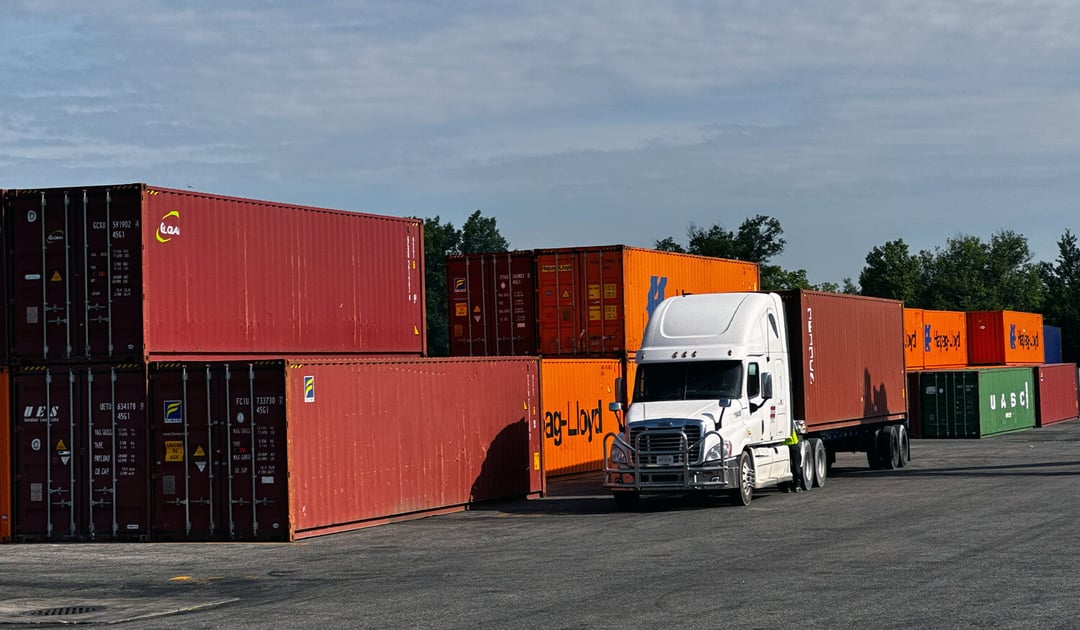
In intermodal, the distinction is more nuanced than that, and applying the truckload frame directly leads to an incomplete evaluation. No single intermodal company owns all the assets in an intermodal move. The railroads own the rail network. The containers may be owned by the railroad, by the intermodal marketing company (IMC), by a private container owner, or by an ocean carrier repurposing equipment for domestic use. The chassis may sit in a shared pool, a private fleet, or a carrier-owned arrangement. The drayage trucks may be company-owned, contracted through a carrier network, or sourced on a load-by-load basis.
The question isn't simply "asset or non-asset." The question is how the provider manages the freight across all three legs of the intermodal move, what level of accountability the shipper can expect, and where the trade-offs sit for the shipper's specific freight and lanes.
What Are the Five Types of Intermodal Providers?
The domestic 53-foot intermodal market is served by five distinct types of providers. Understanding where a provider sits within this framework is more useful than the binary asset vs non-asset question.
What Are Bi-Modal, Asset-Based Carriers and How Do They Work?
Bi-modal carriers are the closest the intermodal market comes to the asset-based truckload model. These companies own intermodal containers (COFC boxes), own a significant portion of their drayage equipment, employ company drayage drivers on payroll, and in some cases operate their own truck fleets alongside their intermodal operations. JB Hunt is the most recognized example of a bi-modal carrier operating at national scale.
The bi-modal model offers shippers direct control over the execution. The provider owns the container, dispatches its own driver, and manages the drayage with company equipment. When the shipment is in transit, the shipper is dealing with one company that controls most of the assets involved in the move.
Trade-offs for shippers:
The asset-based model provides consistency and control in the markets where the provider has equipment and drivers positioned. In those markets, the service experience can be very strong because the provider doesn't depend on third parties for execution. The trade-off is that asset-based providers are constrained by the size and positioning of their fleet. In markets where the provider doesn't have equipment, the capacity either isn't available or the provider supplements with outside resources, which shifts the execution model for those specific moves.
Pricing in the asset-based model carries the fixed costs of equipment ownership, driver payroll, maintenance, and insurance. Those costs exist regardless of utilization, which can affect how aggressively the provider prices in different market conditions. In soft freight markets, asset-based providers may face pressure to fill equipment that needs to move, which can create pricing advantages for shippers. In tight markets, the owned capacity is allocated first to committed customers, which can be an advantage for shippers with consistent volume.
What Are Asset-Lite Providers?
Asset-lite providers occupy a middle position. They own some intermodal containers and a portion of their drayage equipment, but supplement with railroad-owned containers and contracted drayage carriers to extend their coverage and capacity beyond what the owned fleet can handle. STG Logistics, Hub Group, and Schneider are examples of companies operating variations of the asset-lite model.
The operational approach is typically to deploy company owned equipment first on the highest-volume lanes and in the markets where the provider has the densest presence, then overlay contracted capacity for additional coverage, seasonal demand, or geographic areas where owned assets aren't positioned.
Trade-offs for shippers:
The asset-lite model combines some of the consistency benefits of asset ownership with the flexibility of a broader network. Shippers whose freight aligns well with the provider's owned-asset footprint may get an experience similar to the bi-modal model on those lanes. Shippers whose freight extends into markets covered by contracted capacity may see different service characteristics on those moves.
The evaluation question for shippers is which lanes in their network are served by owned assets and which are served by contracted resources. The service experience, accountability structure, and pricing dynamics can differ between the two, and understanding where in the network each model applies gives the shipper a clearer picture of what to expect.
What Are Non-Asset IMCs?
Non-asset IMCs do not own containers or drayage equipment. They hold direct ramp-to-ramp contractual agreements with the class 1 railroads, source containers from railroad-owned fleets or private container owners, and manage drayage through a network of contracted drayage carriers.
The term "non-asset" can be misleading because it implies the provider is simply brokering the move. That framing misses what a true non-asset IMC actually does. A qualified non-asset IMC purchases rail transportation directly from the railroads, has the full backing of the railroads' resources, manages the container logistics, coordinates and dispatches the drayage through established carrier relationships, provides end-to-end visibility and customer service, and takes accountability for the entire move under a single intermodal freight bill.
The distinction between a non-asset IMC and a freight broker is fundamental and worth understanding clearly. The IMC has direct contractual relationships with the railroads. The broker does not. The IMC purchases rail capacity wholesale and manages the intermodal service. The broker accesses intermodal through an IMC or bi-modal carrier and resells it. For a deeper look at this distinction, see our guide on the role of IMCs in intermodal logistics.
Trade-offs for shippers:
The non-asset IMC model offers flexibility and breadth. Because the provider isn't constrained by the positioning of an owned fleet, non-asset IMCs can often serve a wider range of markets and lanes than asset-based providers of comparable size. The contracted drayage network can flex with demand, and the railroad relationships provide access to multiple class 1 networks for optimal routing.
The quality of the model depends entirely on the depth and management of the drayage network. A non-asset IMC with deep, long-term carrier relationships, rigorous performance management, and integrated dispatch operations can deliver service consistency that matches or exceeds asset-based alternatives. A non-asset IMC with shallow or transactional carrier relationships will deliver a more variable experience.
The evaluation for shippers should focus on how the IMC manages the drayage, not on whether it owns the trucks. The drayage management approach, the carrier relationship depth, the dispatch coordination, the accessorial discipline, and the exception-handling capability are what determine the service experience. These are the same evaluation criteria detailed in our guide on Understanding Drayage: The Part of Intermodal That Makes or Breaks Service.
How Do Rail Retailers Differ from IMCs?
A small segment of the market is served by railroads selling intermodal service directly to shippers. Canadian National (CN) and Canadian Pacific Kansas City (CPKC) are the primary examples, typically serving cross-border freight between Canada, the United States, and Mexico.
The rail-direct model eliminates the IMC layer entirely. The shipper contracts directly with the railroad for the rail linehaul, and the railroad either provides or coordinates the drayage. For shippers with freight concentrated on the specific corridors these railroads serve, particularly cross-border lanes, the rail-direct model can be a strong option.
Trade-offs for shippers:
Rail retailers can offer competitive pricing by removing the intermediary margin. The trade-off is typically in customer service, operational flexibility, and the breadth of service support. Railroads are network operators. Their core competency is moving freight on rail efficiently. The customer service, exception management, accessorial mitigation, and consultative support that shippers receive from a dedicated IMC are not always replicated in the rail-direct model. Shippers accustomed to the service layer an IMC provides may find the rail-direct experience less responsive to the operational realities at their docks. And again, the rail-direct option only applies in limited circumstances.
Should You Use a Freight Broker for Intermodal?
Freight brokers offering intermodal as part of their service portfolio do not have direct relationships with the railroads. They access intermodal capacity through IMCs or bi-modal carriers and resell it to their customers. The intermodal move is arranged through an intermediary rather than through a direct railroad contract.
Trade-offs for shippers:
The broker model adds a layer of margin between the shipper and the intermodal capacity. The pricing reflects not only the rail and drayage costs but also the IMC's margin and the broker's margin on top of it. For shippers already working with a broker for truckload, adding intermodal through the same relationship can be operationally convenient, but the pricing and service accountability are typically less favorable than working directly with an IMC.
The more significant concern is that many freight brokers do not have deep intermodal expertise. The nuances of container logistics, drayage coordination, chassis management, accessorial mitigation, and railroad terminal operations are specialized knowledge that brokers focused primarily on truckload may not carry. The shipper's intermodal experience through a broker often reflects the broker's limited visibility into and control over the intermodal execution.
Worth noting: some brokers may represent themselves as having intermodal capability without disclosing that they access capacity through another IMC rather than through direct railroad contracts. Shippers should ask directly whether the provider holds its own railroad contracts or whether intermodal is accessed through a third party.
How Should You Actually Evaluate an Intermodal Provider?
The evaluation criteria that matter most to a shipper's experience are operational, not ownership-based:
-
How the provider manages drayage
-
How accessorial charges are handled
-
What visibility exists across all three legs
-
How exceptions are managed in real time
-
Whether the provider has direct railroad contracts
-
Whether the provider will tell the shipper when a lane doesn't fit intermodal
Those criteria apply equally to asset-based, asset-lite, and non-asset providers. An asset-based provider with poor drayage management in a shipper's specific market will deliver a worse experience than a non-asset IMC with deep carrier relationships and rigorous operational discipline in that same market. The ownership model creates different starting conditions, but the management quality determines the outcome.
The question "do you own the assets?" produces a less useful answer than the question "how do you manage the freight?"
Why? The intermodal market isn't structured the way truckload is. In truckload, the asset vs non-asset distinction is clean: either the carrier owns the truck or a broker finds one. In intermodal, no single company owns all the assets in the move. The railroad owns the rail network. The containers come from multiple sources. The drayage can be owned, contracted, or brokered. The chassis sit in shared pools, private fleets, or carrier-specific arrangements.
For a comprehensive framework on evaluating these criteria across any provider type, see our companion guide How to Evaluate an IMC: A Shipper's Guide.
Key Takeaways: Non-asset vs Asset IMCs
- The domestic intermodal market is served by five types of providers: bi-modal carriers, asset-lite providers, non-asset IMCs, rail retailers, and freight brokers. Each has distinct trade-offs for shippers.
- No single intermodal company owns all the assets in the move. The "asset vs non-asset" frame from truckload doesn't apply cleanly to intermodal. The relevant question is how the provider manages the freight across all three legs.
- Non-asset IMCs are not brokers. They hold direct railroad contracts, purchase rail capacity wholesale, and manage the intermodal service end-to-end. The distinction from freight brokers is fundamental.
- The evaluation criteria that matter most are operational: drayage management, accessorial discipline, visibility, exception handling, and railroad relationships. These apply across all provider types and determine the shipper's experience more than the ownership model alone.
- Ask providers directly whether they hold their own railroad contracts and how they manage drayage in the specific markets relevant to your freight. The answers separate the providers who manage intermodal from the ones who simply arrange it.
If you'd like to evaluate how these provider models apply to your specific freight network, visit the InTek Logistics blog for additional resources, or reach out directly to start the conversation.
Frequently Asked Questions
What is an Intermodal Marketing Company (IMC)? An IMC is a logistics provider that purchases rail and truck transportation services directly from the Class I railroads, sources containers from railroads or private owners, coordinates drayage at both ends of the move, and provides end-to-end intermodal service under a single freight bill. IMCs were created because railroads chose to sell wholesale to intermediaries rather than directly to shippers. For a deeper look, see our guide on the role of IMCs in intermodal logistics.
What is a bi-modal carrier? A bi-modal carrier is an asset-based intermodal provider that owns intermodal containers, owns drayage equipment, employs company drivers, and may also operate its own truckload fleet. JB Hunt is the most recognized example. The bi-modal model offers direct control over execution but is constrained by the size and positioning of the owned fleet.
What is the difference between a non-asset IMC and a freight broker? The fundamental difference is the railroad relationship. A non-asset IMC holds direct contractual agreements with the Class I railroads and purchases rail capacity wholesale. A freight broker does not have direct railroad contracts and accesses intermodal capacity through an IMC or bi-modal carrier. The IMC manages the intermodal service end-to-end. The broker resells access to someone else's service.
Is asset-based intermodal better than non-asset? Neither model is inherently better. Each has trade-offs depending on the shipper's lanes, volume, markets, and service requirements. Asset-based providers offer direct control in markets where they have equipment. Non-asset IMCs offer flexibility and broader coverage through contracted carrier networks. The quality of the drayage management, not the ownership of the equipment, is what most directly determines the shipper's experience.
What is an asset-lite intermodal provider? An asset-lite provider owns some intermodal containers and drayage equipment but supplements with railroad-owned containers and contracted drayage carriers. The model uses company-owned assets as the primary capacity and overlays contracted resources for additional coverage, seasonal demand, or geographic expansion. STG Logistics, Hub Group, and Schneider operate variations of this model.
How do rail retailers differ from IMCs? Rail retailers are railroads that sell intermodal service directly to shippers, bypassing the IMC layer. Canadian National and CPKC are the primary examples, typically serving cross-border freight. The rail-direct model can offer competitive pricing but may provide less customer service support, exception management, and operational flexibility than a dedicated IMC.
Should shippers work with a freight broker for intermodal? Shippers using a freight broker for intermodal should understand that the broker adds a margin layer and may have limited intermodal expertise. The broker accesses intermodal capacity through an IMC or bi-modal carrier rather than through direct railroad contracts. Shippers seeking the strongest intermodal service and pricing typically benefit from working directly with an IMC or bi-modal carrier rather than through a broker intermediary.
What should shippers evaluate when choosing an intermodal provider? The most important evaluation criteria are operational rather than ownership-based: how the provider manages drayage, how accessorial charges are handled, what visibility exists across all three legs of the move, how exceptions are managed in real time, whether the provider holds direct railroad contracts, and whether the provider will honestly assess which lanes fit intermodal and which don't. For the complete evaluation framework, see How to Evaluate an IMC: A Shipper's Guide.
How can I navigate all this terminology? InTek's Intermodal Glossary features definitions of dozens of terms (and explanations of abbreviations and acronyms) unique to intermodal and day-to-day freight & logistics operations.
About This Guide
This guide is part of InTek Logistics' shipper education series designed to help logistics professionals understand the intermodal provider landscape and make informed decisions. The series includes companion guides on how to evaluate an IMC, drayage management, and the role of IMCs.
Domestic freight services: