


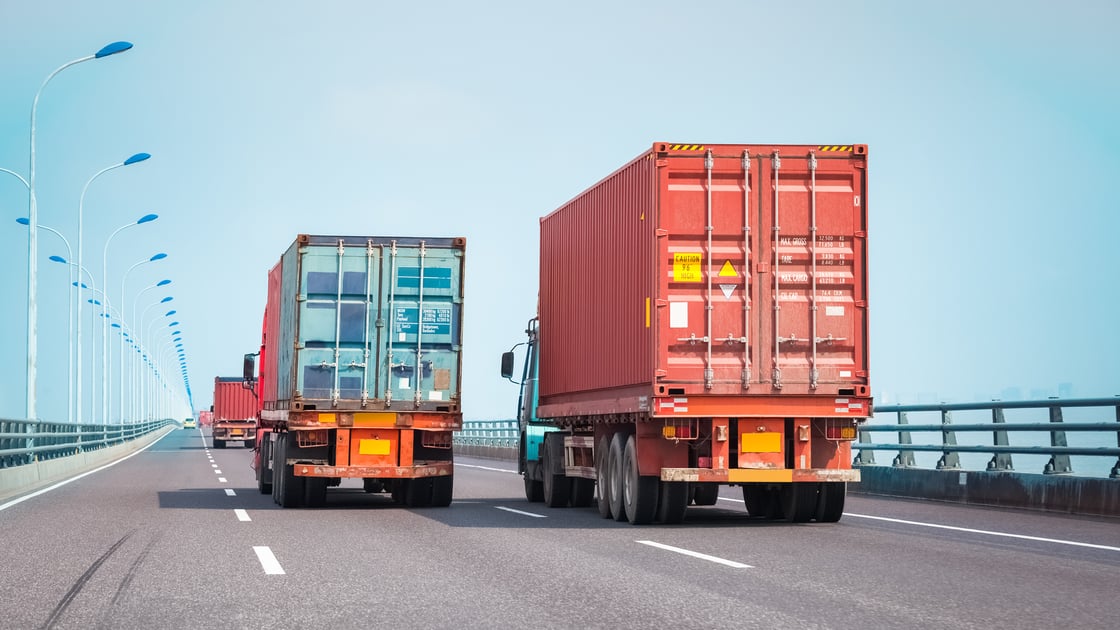
The short answer: a 53' domestic intermodal container should be loaded to a maximum of about 42,500 pounds of cargo. That is roughly 2,500 pounds less than the 45,000 pounds shippers are used to loading in a 53' dry van. The federal gross vehicle weight limit of 80,000 pounds applies to both modes. The difference is equipment tare weight. The shipper is responsible for loading legally and carries the cost when a container goes over.
Weight is the most common issue we see when a shipper moves freight from truckload to intermodal for the first time. Service problems get most of the attention. Weight causes more of the early frustration, because it shows up as a reworked load, a scale ticket, and a delay on freight that was supposed to save money.
The rules themselves are not complicated. What trips shippers up is that intermodal changes two things at once. The equipment is heavier. And the tractor pulling the container at destination is not the tractor that pulled it at origin.
Why the intermodal payload is lower than truckload
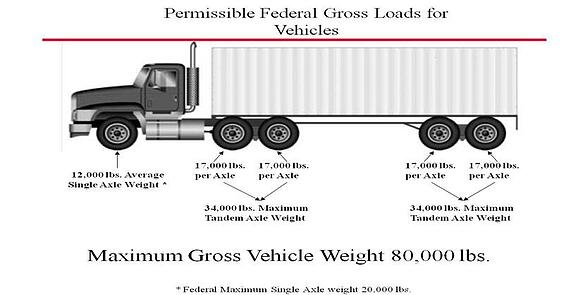
The legal ceiling is identical. Under 23 U.S. Code 127, the maximum gross vehicle weight on the Interstate System is 80,000 pounds for the tractor, chassis, and container or trailer combined, cargo included.
What changes is how much of that 80,000 pounds the equipment consumes before any freight is loaded.
| 53' dry van (truckload) | 53' domestic container + chassis (intermodal) | |
|---|---|---|
| Federal gross weight limit | 80,000 lbs | 80,000 lbs |
| Typical equipment tare | Lighter | Roughly 2,500 lbs heavier |
| Recommended maximum cargo weight | ~45,000 lbs | ~42,500 lbs |
| Who is responsible for legal loading | Shipper, with carrier oversight in practice | Shipper |
A 53' COFC domestic container sits on a separate chassis, and the two together weigh more than a single dry van trailer. Tare weights vary by container generation and chassis type. The planning number does not vary with them. Load to 42,500 pounds.
One rule has changed since this article first published. Tractors powered primarily by natural gas or battery electric power may exceed the federal limit by up to 2,000 pounds under 23 U.S. Code 127(s). The ceiling for those units is 82,000 pounds. The allowance covers the added weight of the fuel or battery system. It is not additional payload, and state rules off the Interstate System vary.
Why 42,500 pounds is the planning number, not the maximum
The 42,500 figure is built from an average container, an average chassis, and an average drayage tractor. Averages leave room in both directions.
The number is a planning target for a reason. A shipper who loads to exactly 42,500 pounds has almost no margin left for equipment variation, and equipment variation is a feature of intermodal, not an exception.
Here is the situation we see play out most months with new intermodal shippers.
A shipper loads to 42,500 pounds and edges slightly over. At origin, the container is pulled by a day cab with less than half a tank of fuel. The combination scales legal, the load leaves the shipping dock, and nothing looks wrong. At destination, the container comes off the ramp behind a larger tractor that just came from a fueling station. The added cab weight and full fuel push the combination past 80,000 pounds. The load is now overweight, several hundred miles from the plant that loaded it.
By definition, an intermodal move uses different dray equipment on each end. The origin-legal, destination-overweight scenario recurs for that reason. This is not a fluke, and it happens to seasoned shippers, not only new ones.
The practical guidance: treat 42,500 as the ceiling, and leave several hundred pounds of margin underneath it on freight that runs consistently heavy.
The shipper owns the load, and the costs that follow
The intermodal shipper is responsible for loading within legal weight limits. That responsibility carries the costs when a load is out of compliance.
This surprises shippers coming from truckload, and the surprise is reasonable. In over-the-road truckload, the driver is at the dock, the driver scales the load, and the driver has a direct interest in catching a problem before leaving. In intermodal, the container is loaded, sealed, and handed to a dray driver who may never see the freight.
When a container has to be reworked to run legal, the costs typically include:
- Scaling charges to confirm the actual gross and axle weights
- Overweight fines and citations, which vary by state and by how far over the load is
- Additional dray charges for the extra moves the correction requires
- Labor to restack, redistribute, or remove product
- Storage, per diem, or chassis charges that accrue while the load sits
Those costs land on the shipper. For definitions and the practical steps that keep them from stacking up, see our guide to demurrage, detention, per diem and storage charges.
The freight savings on an intermodal lane are real. One reworked container can erase the savings on several loads. That is the trade a shipper accepts by not building the weight discipline in up front.
Gross weight is only half the requirement
A load can be legal on gross weight and still be illegal on the road.
Federal axle limits on the Interstate System are:
| Axle group | Maximum weight |
|---|---|
| Steer axle | 12,000 lbs |
| Drive tandem | 34,000 lbs |
| Trailer or chassis tandem | 34,000 lbs |
Those limits work alongside the Federal Bridge Gross Weight Formula. The formula governs how much weight a group of axles can carry based on how far apart the axles sit. A combination can pass the 80,000 pound gross test and fail an axle group, and the reverse happens too. Enforcement is by axle group, not by the total on the bill of lading.
Weight distribution is where intermodal loading discipline pays off. A container loaded heavy in the nose puts weight on the drives. A container loaded heavy in the rear puts it on the chassis tandem. The dray driver on a fixed-axle container chassis often has no slider to work with, so distribution has to be right when the container is sealed.
Blocking and bracing does more than protect the cargo
Blocking and bracing is usually discussed as a cargo protection measure. The second job it does is weight compliance.
Product that shifts in transit moves weight from one axle group to another. A container that left the dock properly distributed can arrive at the ramp with too much weight on the chassis tandem. The only cause was a load free to move. The gross weight never changed. The distribution did, and the distribution is what gets measured.
Intermodal moves involve lift equipment, rail car coupling, and two dray legs. There is more handling than a truckload move, and more opportunity for an unsecured load to redistribute itself. Our guides on blocking and bracing and blocking and bracing for intermodal freight walk through the methods.
Like gross weight, weight distribution is the shipper's responsibility, and the rework costs follow the same path.
State rules that change the math
Federal limits set the floor for the Interstate System. States add rules on their own highways, and several of them affect intermodal directly.
The best known is California's kingpin to rear axle rule. On units over 48 feet with two or more axles, the distance from the kingpin to the center of the rearmost axle cannot exceed 40 feet. Single axle units are held to 38 feet. California is not alone. Alabama and Connecticut carry their own kingpin to rear axle allowances, and the measurement point differs by state.
Beyond kingpin rules, individual states enforce posted limits on specific highways and bridges, and some restrict routes for containers entirely. A lane that runs legal in one corridor may need a different load plan in another.
The practical takeaway is not to memorize fifty state codes. It is to tell your provider where the freight is going before you build the load plan, because the destination state can change the loading target.
Building weight discipline into the lane
Weight problems are a first-year problem for most shippers, and they stay solved once the loading standard is set. The work happens before the first container is spotted.
- Set the loading standard in writing at 42,500 pounds, and treat it as a ceiling rather than a target
- Build in margin on product that runs consistently heavy or varies by lot
- Confirm weight distribution front to back, not only total weight on the bill of lading
- Block and brace so the distribution that leaves the dock is the distribution that arrives
- Flag destination states with kingpin or route restrictions before the load plan is finalized
- Scale the first several loads on a new lane and use the actual readings to set the standing target
A capable intermodal provider walks the shipper through this before the first load. Unusual freight gets load plan guidance from the railroad, and the harder commodities can get on-site support.
Final Words
- Load 53' domestic intermodal containers to 42,500 pounds and build margin beneath it. The 80,000 pound federal ceiling is shared with truckload. The usable payload is not.
- Check distribution, not only gross. Axle limits of 12,000, 34,000 and 34,000 pounds are enforced independently of the total.
- Block and brace as a weight compliance step. A shifted load fails on distribution even when the gross weight never changed.
- Confirm destination state rules before the load plan is set, starting with kingpin to rear axle limits.
- Scale the first loads on any new intermodal lane. Actual readings beat averages, and they set the standard for every load after.
If you would like to evaluate how intermodal fits into your freight strategy, visit the InTek Logistics blog.
If you would like a lane-by-lane evaluation, we are here to help at free quote.

Frequently Asked Questions
What is the maximum weight for a 53' intermodal container? About 42,500 pounds of cargo. The federal gross vehicle weight limit of 80,000 pounds covers the tractor, chassis, container and freight combined. A 53' domestic container and chassis weigh roughly 2,500 pounds more than a comparable dry van. That difference comes out of the payload.
Why is the intermodal weight limit lower than truckload? The legal limit is the same. The equipment is heavier. A domestic container riding on a separate chassis consumes more of the 80,000 pound allowance than a single dry van trailer, leaving roughly 2,500 pounds less for cargo.
Who is responsible for an overweight intermodal container? The shipper. Loading and sealing the container puts gross weight and weight distribution on the shipper, along with the cost of correcting a load that runs over.
What does it cost to correct an overweight intermodal load? Costs typically include scaling charges, fines, additional dray moves, labor to rework the load, and accessorial charges that accrue while the container sits. A single rework can offset the savings on several loads.
What are the federal axle weight limits? On the Interstate System: 12,000 pounds on the steer axle, 34,000 pounds on the drive tandem, and 34,000 pounds on the trailer or chassis tandem. The Federal Bridge Gross Weight Formula applies on top of those limits.
Can an intermodal load be legal at origin and overweight at destination? Yes. Origin and destination dray use different tractors. A heavier cab, a full fuel tank, or a shifted load can push a combination over 80,000 pounds even though it scaled legal at the shipping dock.
What is the California 40 foot kingpin rule? California caps the distance from the kingpin to the center of the rearmost axle at 40 feet on units over 48 feet with two or more axles. Single axle units are held to 38 feet. Other states carry their own kingpin to rear axle limits.
Do electric and natural gas tractors get extra weight? Yes. Tractors powered primarily by natural gas or battery electric power may exceed the federal limit by up to 2,000 pounds, to a maximum of 82,000 pounds. The allowance covers the power unit's added weight, not additional cargo.
Related Reading
- What Is an Intermodal Container?
- Definition and Importance of Gross and Tare Weight in Logistics
- What is the legal weight shippers are permitted to load?
- Demurrage, Detention, Per Diem and Storage: Definitions and How to Avoid
- A Deep Dive into Dray and Drayage