


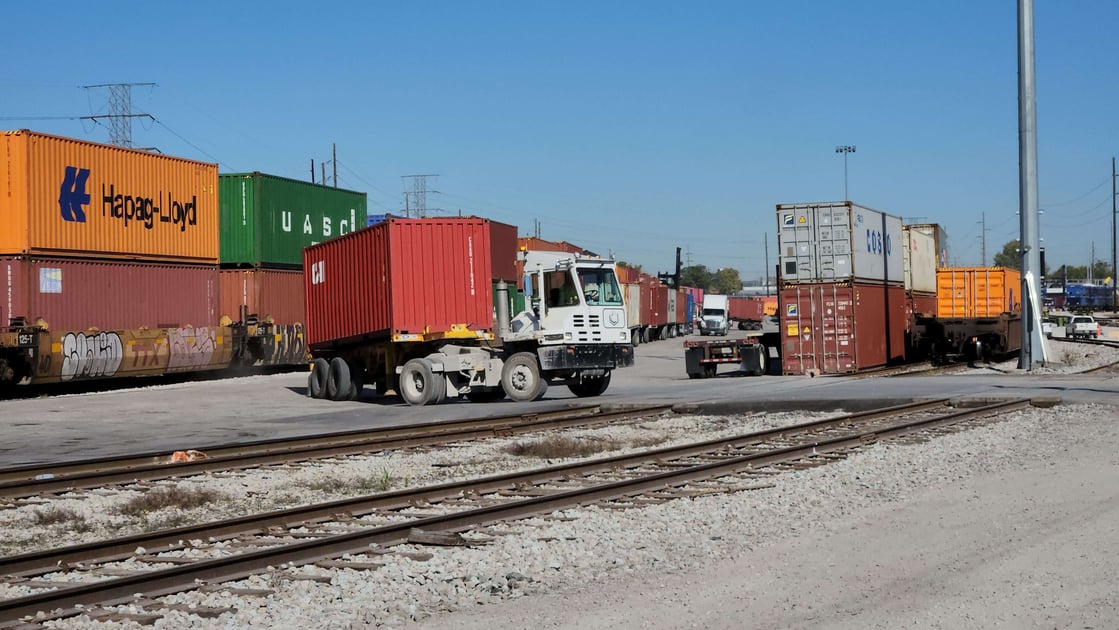
Savings are at record highs for intermodal versus truckload, but the window to realize those savings may close soon. The Journal of Commerce Intermodal Savings Index (ISI) for Q4 of 2026 (reflecting third quarter activity) shows shippers saved about a third on contract freight and more than 30% on spot freight using intermodal - with that contract figure representing the highest ever measured in the index's 11-year history.
Author Ari Ashe points out the gap was at its greatest partly due to the timing of contract negotiations - with truckload contracts up in Q3 while intermodal generally waits until early 2027. Of course, 2027 is now in sight, and contracts with intermodal providers are expected to start catching up at that point. In other words, the proverbial window for the most significant savings is nearly closed - though intermodal savings will persist to a degree as always (the index average over time is 16-19% spot and 25% contract).
How much is intermodal savings vs truckload as of November 2026?
The Intermodal Savings Index measures intermodal spot rate savings vs. truckload at 31.6% as a Q3 average in 2026. For the first time this year, contract savings has surpassed spot, with contract coming in at a record 33.1%. As we often mention, contract savings is perhaps more significant to shippers' bottom line, as about 90% of intermodal loads move via contract rates.
The spot spread is up 9.1% versus Q3 of 2025, while the contract spread is 6.8% higher. In addition to still elevated truckload versus intermodal rates themselves, the continued record cost of diesel further hurts over-the-road's case, as intermodal is three to four times more fuel efficient than shipping via truck.
To follow weekly spot rate movement in truck and intermodal - along with diesel fuel pricing, be sure to visit our InTek Intermodal Index (III) - which also offers the option to subscribe for free email updates delivered each week.
Intermodal volume adds another record
After the second quarter set an all-time high for intermodal volumes, Intermodal Association of North America (IANA) figures show North American railroads moved 2.43 million domestic containers from July to September. That surpasses Q2's 2.35 million and marks 9.1% year-over-year volume growth.
While service has generally held up well, there were a few more documented hiccups in Q3 - with average train speeds down 2.9% vs 2025. There were also issues with chassis shortages and truck turn times at select East Coast terminals and track flooding in New Mexico, though all those represented brief speed bumps that railroads were able to resolve.
JOC expects another quarterly volume record to close out 2026 with more yearly growth. Specifically, it forecasts a potential high-end of 2.56 million containers in Q4 compared to 2.3 million from October to December of last year. That would keep railroads on track to surpass 9 million domestic containers moved for the whole of 2026 - the first time that would ever happen.
For more information and commentary on the intermodal market from July to September of 2026 - including rates, volumes, service and projections, subscribe to the Journal of Commerce for its detailed report. Learn more about tracking both intermodal savings and service, with the report's author Ari Ashe, on The Intermodal Logistics Podcast:
Each quarter, the Journal of Commerce (JOC) releases its proprietary Intermodal Savings Index, which combines real data from the intermodal and truckload marketplace with forecasts and more. Here at InTek Logistics, we provide intermodal spot rate statistics that assist in JOC's calculations.
In other words, we know the intermodal market, and we're happy to put that knowledge to use for you. Just let us know your shipping needs, and we'll discuss solutions tailored to your company. In the meantime, please do check out the variety of intermodal, plus freight and logistics in general, information we have in our free Freight Guides.