


Intermodal Pricing: How Intermodal Rates Are Built and What Moves Them
November 11, 2026 •Rick LaGore
Intermodal Pricing: How Intermodal Rates Are Built and What Moves Them
31:16
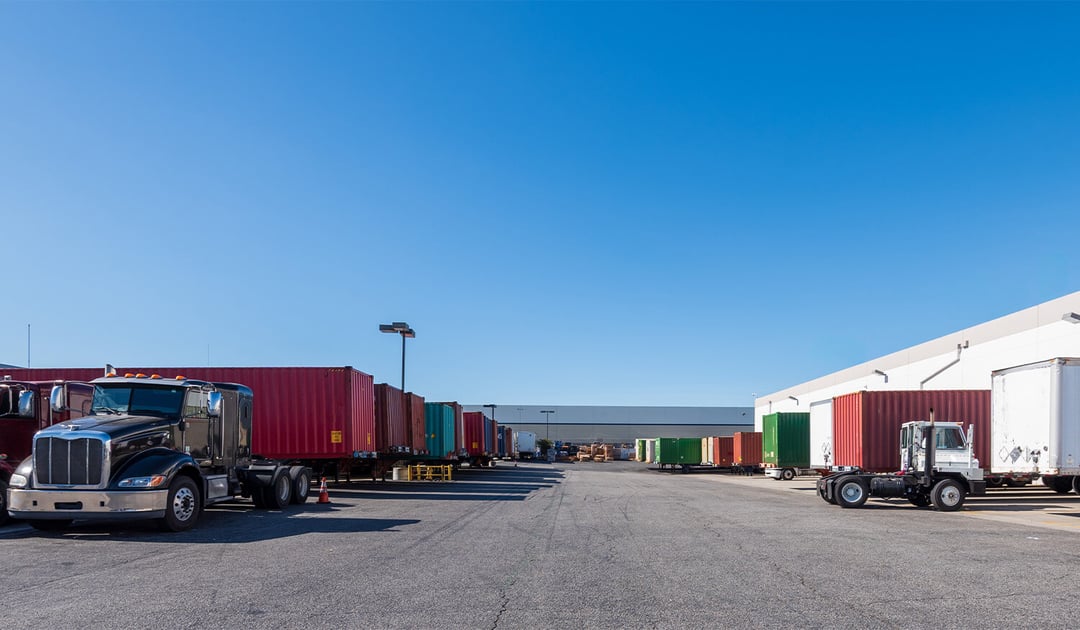
Intermodal pricing is the all-in cost of moving a 53-foot container door to door, using truck for the short legs and rail for the long middle. A quoted intermodal rate bundles three moves into one number: the origin drayage, the rail linehaul, and the destination drayage. The ramp lifts and any interline charge sit inside the various legs of an intermodal shipment. Like truckload, there is a fuel surcharge added to the pricing of an intermodal shipment that's tied to the national diesel price. Accessorials are billed only when a shipment runs outside the parameters the intermodal rate quote assumes.
In other words, the rate an intermodal provider quotes a shipper is deeper than it looks. Two lanes of the same length can price 30% apart because one runs with the flow of freight and the other against it, meaning the lane is either a headhaul or a backhaul lane. The same lane can price differently in March and October. And the rate a shipper sees is only part of what the shipment costs once fuel, free time and transit days are counted.
This blog walks through what sits inside an intermodal rate and why the lane decides more than the mileage. It covers how fuel and contract structure change the number, what the accessorial schedule adds, and how to get a rate that holds up for a year. It also states plainly where intermodal pricing does not favor the shipper. That's the part of the decision that saves money.
Key Takeaways
- An intermodal rate covers three moves: origin dray, rail linehaul and destination dray. The ramp lifts and any interline charge are inside the rail leg. Fuel is added by surcharge while accessorials are billed by exception.
- The lane itself sets the price more than the distance. Headhaul lanes price higher than backhaul lanes, and dense ramp-to-ramp corridors price lower than thin ones.
- Intermodal qualifies on lanes of 750 miles or more. On those lanes it typically runs 15% below truckload on a comparable all-in basis. Below that, truck is the default.
- Rail moves a ton roughly three times farther on a gallon of diesel than a truck does, so rising fuel widens the intermodal savings and falling fuel narrows it.
- Contract pricing on intermodal buys capacity on top of the rate. A mutual commitment program locks price and weekly capacity for a year, with peak charges only on containers above the trailing eight-week lane volume.
- The right comparison is total delivered cost over time. Fuel, free time, transit days and rate volatility all belong in it beyond a one-to-one look at linehaul.
- The best time to bid intermodal is early in the first quarter, when volumes are lowest and Class 1 annual pricing resets. A fourth-quarter RFQ invites peak pricing.
What is included in an intermodal rate?
Like its truckload counterpart in the 53’ capacity market, a door-to-door intermodal rate is a single price for a container move. However, unlike truckload, the single-priced intermodal rate has underneath it three moves every shipment makes in its transit from origin to destination.
-
Origin drayage. A local truck brings an empty container and chassis to the shipper’s dock, waits while it is loaded, and hauls it to the origin rail ramp. Priced as a base rate by zone or mileage from the ramp.
-
Rail linehaul. The train moves the container between the origin and destination ramps. This is the largest share of the rate and the part that gives intermodal its cost advantage over distance. The rail number also carries the work done at the ramps: the lift from chassis to wellcar at origin, the lift back to a chassis at destination, and an interline charge if the container changes railroads on the way. Those are usually built into the rail rate, sometimes shown as line items, but they are part of the rail leg, not separate moves.
-
Destination drayage. A second local truck collects the container at the destination ramp, delivers it to the receiver, and returns the empty.
On top of the rate, the fuel surcharge is applied as a percentage of the linehaul or as a cents-per-mile figure. Most intermodal providers set it from the U.S. Energy Information Administration national diesel average published every Tuesday morning - with the new surcharge taking effect for the week the intermodal shipment is picked up.
Similarly to truckload shipments, accessorials are not in the initial rate. They're billed when a shipment requires additional work or time than the quoted rate assumed. Those could include more dock time, more days at the ramp, or more days on a chassis.
Intermodal quotes are door-to-door and can either be linehaul plus fuel or all-in. A truckload rate is one carrier, one truck and one driver in one number. To avoid confusion for shippers, intermodal providers (known as intermodal marketing companies or IMCs) quote intermodal the same way, with all three legs and associated costs included in the linehaul - and the fuel surcharge added on.
Why does the lane matter more than the mileage?
Distance is the first filter on intermodal pricing, but it's the lane that sets the rate. Every freight lane, whether truckload or intermodal, carries more freight in one direction than the other. The direction with more demand than capacity is the headhaul. The direction with more capacity than freight is the backhaul. A headhaul rate is the higher of the two rates in an origin and destination pair. A backhaul rate is the lower one. Carriers price backhaul freight down - sometimes below cost - because a container moving at a discount beats a container moving empty back to where the freight is.
This idea is truer in the ISO domestic re-positioning market where ocean carriers work with domestic IMCs to find paying freight in inland origins where they do not have export traffic and therefore typically must send their containers back to the ports empty.
Getting back to 53’ domestic intermodal shipments, one can see the same mechanics in trucking. The difference is that the imbalance on rail is structural, more pronounced, and slow to change.
Containers flow out of Southern California and into the Southeast have run heavy for years. Florida is the standing example of a backhaul market, with far more freight going in than coming out. Freight that runs against the flow gets a better rate for it. Freight that runs with the flow pays the headhaul rate and competes with everyone else for the same equipment.
Lane density matters alongside direction. High-volume city pairs with daily train frequency price lower per mile than shorter lanes with thin service, because the railroad and the provider spread fixed cost across more containers. A 1,400-mile move between two major ramps can cost less per mile than a 900-mile move that touches a secondary terminal. But instead of the ramp distance, it's the ramp pair that the rate is built on.
Drayage distance is the third lane variable. Railroads do not all serve the same ramps, so the ramp a given provider can use may sit 30 miles from the dock or 130 miles from it. Each additional dray mile is a truck mile, priced like a truck mile. The rule of thumb is that dray legs at or under 100 miles keep the lane clean, and longer rail linehauls can absorb longer dray. On high-volume lanes a drop-and-hook pool offsets a longer dray by cutting dock time at both ends.
Taken together, these three variables explain most of the spread between two intermodal quotes on lanes of similar length. When a quote looks high, the first question is which direction the freight runs, how dense the corridor is, and how far the dock sits from the ramp.
At what distance does intermodal pricing work?
Intermodal qualifies on lanes of 750 miles or more. Below that, the two dray legs and the terminal handling absorb most of the rail savings, and truckload is the default. Shorter lanes do work on occasion when both docks sit close to major ramps and the weekly volume is steady, but those are priced only when a specific lane reason exists (they're definitely not the place you'd ideally start a conversion program). The threshold is where the odds flip in intermodal’s favor without a special case. Distance and corridor set the review order, then shippers evaluate lane economics and service needs to make the decision.
Above the floor, the savings grow with distance. The rail linehaul is the cheapest segment per mile, so the longer the train leg relative to the two truck legs, the lower the blended cost per mile. A transcontinental lane is where intermodal pricing is strongest against truckload. A lane just past the threshold is where it has to be checked.
Truck is the default under 750 miles and in weak corridors. It's the screen that keeps a shipper from switching a lane to intermodal that will only turn back to the highway at the first service problem.
How does fuel change intermodal pricing?
Fuel is a separate line on an intermodal invoice, and it changes at a different pace than fuel on a truckload invoice. Rail moves a ton of freight roughly three times farther on a gallon of diesel than a truck does. The fuel surcharge on an intermodal move reflects that. When diesel rises, the surcharge on the rail leg rises slower in dollar terms than the surcharge on comparable truckload moves simply because there are fewer gallons underneath it. The two dray legs carry truck-like fuel exposure, but those are short.
The practical result is that fuel widens and narrows the intermodal savings. In a high-diesel period, the gap between an all-in intermodal rate and an all-in truckload rate grows. In a low-diesel period it shrinks. Compare modes in a cheap-fuel year and the savings look smaller than the same comparison shows when diesel is above $4 a gallon.
Fuel surcharges are published on a fixed weekly schedule from the EIA national average. Intermodal surcharge tables tend to step in smaller increments than truckload tables. That makes fuel on an intermodal program more predictable to budget. For a shipper managing an annual freight spend, that matters more than the headline rate.
Contract, spot and project pricing: which should a shipper use?
Intermodal is bought three ways: contract, spot and project. The choice a shipper makes between the three shapes the rate more than negotiation does.
Contract pricing is a rate promised for a lane over a set period at an assumed volume, usually negotiated once a year. On intermodal, contract pricing carries something truckload contracts rarely do: a capacity commitment. A mutual commitment program, often shortened to MCP, locks the rate and a weekly container allocation for the year. The shipper commits to tendering the volume. The provider commits to covering it, including through peak. Peak season charges under an MCP apply only to containers above the shipper’s trailing eight-week volume on the lane. Freight inside the commitment moves at the contract rate all year.
That structure is the reason intermodal contract rates hold when truckload spot rates spike, and it's also the reason a contract requires volume. A lane that moves two containers a month does not qualify for an MCP and must be priced on spot.
Taking it a step further, the capacity commitment is what makes an MCP worth having through peak, but it's only as good as the volume the shipper runs through the program before peak arrives. The baseline is built from the trailing eight weeks on the lane. A shipper who runs a small share of its freight on the program through the summer enters peak with a small commitment. While that may seem fine at the time, it becomes the only guaranteed capacity it will have when the market tightens. We press the shippers on our programs to push volume ahead of peak for that reason. Most do. One or two each year do not, and they're the ones who find in October that capacity is not there - with the budget and the service levels going with it.
Spot pricing is negotiated when the shipper needs to move the freight. It reflects supply and demand on that lane, that week and can change daily. Spot is where shippers without qualifying volume buy intermodal, and where contracted shippers buy overflow above their commitment. Spot is not reliably cheaper than contract. In a soft market it can be, but in a tightening market it runs above contract - and the shipper buying on spot is the one who finds out first.
Project pricing covers volume outside the normal pattern: a plant relocation, a seasonal build, a one-time inventory move. A guaranteed commitment over a short window can secure a favorable rate and dedicated equipment for the duration. Seasonal shippers who cannot support an annual MCP sometimes fit project terms.
The decision rule is simple. Freight with consistent weekly volume on a qualifying lane belongs on contract, because the capacity guarantee is worth more than any rate difference. Variable freight belongs on spot, priced lane by lane. Freight with a defined start and end belongs on project terms. Mixing them is the mistake. Running a contract lane on spot quotes because one week’s print looked lower gives up the capacity commitment, and most of the savings go with it.
Intermodal works best as a program with consistent weekly volume. Shippers who move in and out of intermodal on price comparisons rarely see the best version of the service and savings the mode can deliver.
What do intermodal spot rates tell a shipper?
Intermodal spot rates are a market read, but it's important to caution that they shouldn't be treated as a buying method.
InTek has tracked the 53-foot intermodal spot market every week since 2008. The InTek Intermodal Index (III) prices 115 of the highest-volume door-to-door lanes offered by Class I railroads and weights them by IANA region-to-region volume. It publishes a composite dollar figure and a per-mile rate each week. The published index excludes fuel, so the week-over-week and year-over-year moves show the rate itself without the diesel market underneath it, although internally we look at both excluding and including fuel to help our customers understand market conditions against truckload.
What the index is for is reading where the whole 53-foot market is heading and how strong it is during a given week. Truckload spot rates move first and signal a market turn. Intermodal rates confirm whether the turn has momentum. The intermodal market is concentrated in Class I railroads and a small group of IMCs with large balance sheets, and they do not reprice on a whim. A truckload spike that intermodal does not follow is usually a head fake, whereas a move that shows up in both spot markets is likely durable. The two series track each other closely over time, with a correlation near 0.90.
What the index is not for is deciding whether to tender this week’s freight to intermodal or truck. A shipper who flips modes on the weekly print trades a program for a series of one-off moves and pays for it in service. Use the index to set budgets, time contract negotiations and judge whether a quoted rate is in line with the market. Use the lane review to decide what moves.
The Journal of Commerce’s Intermodal Savings Index publishes the same comparison quarterly in savings-percentage form, showing how far intermodal spot rates sit below truckload spot rates on comparable lanes. InTek has contributed data to it since its inception, and it serves as the public benchmark for the spread. To fill in the gap in the quarterly reports, follow me (Rick LaGore) on LinkedIn for my monthly intermodal report.
How does intermodal pricing compare with truckload?
On lanes of 750 miles or more, intermodal typically prices 15% below truckload for a comparable 53-foot load on an all-in basis including fuel and both dray legs. The spread is far from fixed, though. It widens when truckload capacity tightens and when diesel rises. It narrows when truckload is soft and fuel is cheap. The comparison has to be built correctly or it misleads. Four things belong in it:
- Fuel, on both sides. An intermodal all-in rate against a truckload linehaul rate without fuel overstates intermodal’s cost, but the reverse understates it.
- Expected accessorials. Truckload detention typically starts after one or two hours at the dock. Intermodal free time at the dock is two hours at each end, and the ramp adds free days for storage and chassis. A shipper with slow docks pays detention in both modes, but the triggers and rates differ.
- Transit days. Intermodal adds one to two days on most long-haul lanes compared with a solo truck. The inventory carrying cost of those days is real, and for most dry freight on a weekly program it is small next to the rate savings.
One more variable belongs in the comparison. A 53-foot intermodal container and its chassis weigh more than a 53-foot dry van, so the legal payload runs lower. Plan on around 42,500 pounds against roughly 44,500 for a van. For freight that fills the cube before it reaches the weight limit, the gap does not matter. For heavy freight, the shipper may need more containers than trailers to move the same tonnage, and the per-unit savings has to be checked against the extra unit.
The rate is only one of the ways the two modes differ in cost over a year. Intermodal contract rates hold through truckload spikes. Intermodal fuel surcharges step more gradually. Rail adds capacity by adding cars to existing trains. Trucking cannot match that in a tightening market. One week of emergency truckload spot freight in a capacity crunch can cost more than a year of intermodal savings on the same lane.
What does the cheapest intermodal rate cost?
The lowest intermodal quote is not the lowest cost. A rate that comes in well under the market usually has something taken out of it. The common missing pieces we find when a shipper tells us our rate is outside market parameters, yet willing to share their other quotes are:
- The dray is priced to a ramp the provider cannot reliably get capacity at, and the move gets re-rated when the container has to route through another terminal
- The chassis is not in the rate, and the daily chassis charge shows up on the invoice
- The free time is shorter than the standard, so storage and per diem start a day earlier
- The provider has no dray coverage at one end and brokers it at spot, and the service failures that follow cost more than the rate saved
- The cargo liability is lower than the $250,000 standard on intermodal moves, which only matters on the day a claim is filed
Below the rate, the provider’s own standing matters. A shipper who pays a provider that cannot deliver on its service commitment ends up paying twice, because products not on shelves or components missing from the shipper’s manufacturing operations have real costs and implications.
The best rate is the one that holds for the year and covers the freight at the service level the receiver needs. It does not generate an accessorial schedule the quote never mentioned. A provider that asks about the docks, the receiving hours, the commodity density and the weekly pattern before quoting is pricing the freight. A provider that quotes off a ZIP code pair alone is pricing a guess that will likely come back to bite the shipper in the end.
When is the best time to bid intermodal freight?
The best negotiated rates come from quoting when overall volumes are at their lowest. Carriers and railroads price with the information in front of them, and if market capacity is loose, they price to win freight when freight is scarce. And when carriers are looking for freight, they price to fill their network and operations at the most competitive price.
For intermodal bids, that points to early in the first quarter. January through March is the slow season across freight. Holiday replenishment is done, year-end pushes have cleared, and the Lunar New Year pause in Asia thins import flows into the rail network. The Class I railroads also run their annual pricing cycle at the start of the year, so first-quarter intermodal quotes reflect the new year’s base rates before demand builds.
A bid issued a few weeks into the first quarter, priced to start in the second, catches the low point most years. A fourth-quarter RFQ does the opposite. October and November are peak for most of the network. Volumes are at their highest, capacity is tightest, and every provider is pricing with peak in the window. Rates bid in the fourth quarter carry that premium for the full term.
The rest of the calendar matters not for when a contract is bid, but for how a program runs. Produce season from April into June creates regional tightness out of the West Coast and Mexico. Early July usually dips before intermodal peak begins as early as mid-July in a strong year. Hurricane season can pull truck capacity into recovery lanes at a premium. Peak runs from late August to the first week of December. A mutual commitment program covers all of it at the contract rate for freight inside the weekly allocation. That is the reason to have one before the calendar turns.
Two tactics help between annual bids. A mini-bid on a specific lane where volume has outgrown the plan locks that lane in without reopening the whole budget. A quarterly program review against the InTek index shows whether the contract rate sits where the market is. With that in hand, a shipper can decide whether the next annual bid should move earlier or later.
One note for the shippers who build next year’s freight budget in late third quarter or early fourth. Treat the budget as a financial exercise instead of a sourcing event. That window is when freight markets price highest, so a bid run alongside the budget locks in peak rates for the year. Build the budget from what is known at the time, using the index and the other market inputs described above, and then run the sourcing bid in the first quarter when the market is at its low.
Which accessorials change the real price of an intermodal move?
Accessorials are the part of intermodal pricing that a rate sheet does not show and an invoice does. Most are avoidable with dock discipline, planning and some negotiating at the time the quote is being assembled. The ones that show up most on 53-foot domestic moves are:
- Detention. The dray truck is held at the dock beyond free time, typically two free hours at origin and two at destination. Billed by the hour
- Storage and demurrage. The container sits at the ramp past its free days. Billed per day, escalating, and the clock does not stop for congestion or closures
- Chassis usage. The chassis stays out past its free period. Billed per day
- Per diem. One carrier’s container, chassis or trailer is held by another party past free time. Billed per day
- Pre-pull. The container is moved from the ramp to an off-site yard before delivery because the receiver is not ready or the terminal needs the space. Off-site storage costs far less than on-ramp storage, so a pre-pull is often the cheaper outcome once a delay is known
- Overweight and re-work. The load exceeds the legal gross or axle limits and has to be re-worked to legal weight. Over 95% of weight issues trace to load shift in transit, which is why blocking and bracing is a pricing issue and not just a damage issue
- Peak season surcharge. A per-container charge in peak on volume above the committed allocation. Inside an MCP, it applies only to containers over the trailing eight-week lane volume
- Flip. The container is moved from one chassis to another, usually because the wrong or a damaged chassis was assigned. Rare with a provider that manages its own chassis
A few reminders: Pre-plan the dray before the train arrives. Move the oldest container first when several are at the ramp. Confirm the receiver can take the delivery before the container is pulled. Keep appointments. Block and brace to the rail standard. Our breakdown of the top intermodal accessorial charges and how to avoid them covers each in detail, with the dollar ranges to budget against.
Does the economy or peak season still move intermodal rates?
Economic and peak season factors do move intermodal rates, but they move them later and less drastically than truckload rates on the same news.
A stronger economy raises freight demand and tightens truck capacity. Freight moves toward intermodal, and intermodal rates lift with a lag. Container shortages, whether from demand or from a bottleneck in the network, push rates up on the affected lanes. Inflation and freight costs feed each other, with fuel as the main transmission, and rising shipping costs have historically run ahead of broader inflation by several months.
Peak season still exists. It is the stretch when retailers push inventory into the channel for back-to-school and the holidays. It brings general rate increases and peak surcharges even in years when rates are otherwise falling. What has changed is that peak has spread. E-commerce flattened the curve: early import arrivals moved part of it forward, and the lanes that tighten shift from year to year. A constrained lane outside the traditional peak behaves like a peak lane with the requisite pricing effect.
For a shipper, the implication is the same one that runs through this whole guide. Rates respond to conditions. A program with committed weekly volume on contracted lanes rides through most of the response at the contract rate. Freight bought on spot rides the whole curve (or perhaps more appropriately, rollercoaster).
How do you get an intermodal rate?
A door-to-door intermodal quote needs more than a ZIP pair, because the dray legs and the dock conditions are where the rate is won or lost. A provider needs more detailed information to price a lane correctly, including:
- Origin and destination ZIP codes, and the addresses
- Weekly volume and how steady it is through the year
- Commodity and how it is loaded (palletized, floor-loaded, slip sheets)
- Weight per load, so payload can be checked against the container limit
- Receiving hours, appointment requirements and dock type at both ends
- Required transit and any delivery windows that cannot move
- Current mode and current all-in cost, if the shipper wants a comparison
- Insurance requirements. The typical as is under $100K, between $100K and 250K, and over $250K
With all that information, a provider can return the routing, estimated savings against the current mode and service notes for each lane. Without it, the quote is a placeholder that gets re-priced once the freight starts moving.
A lane review is also where a shipper finds out which lanes should stay on truck. Lanes under 750 miles come out of the review as truck lanes. So do the ones with thin dray coverage at one end and the ones with transit windows rail schedules cannot meet. Those are the right results. Converting the freight that fits and leaving the rest where it is produces a program that holds - the only kind that saves money for more than a quarter.
Frequently Asked Questions
What is intermodal pricing? Intermodal pricing is the door-to-door cost of moving a container by the combination of truck and rail. The base rate encompasses three legs: origin drayage, rail linehaul and destination drayage, with ramp lifts included in the rail portion. Fuel is either added as a surcharge or included in an all-in quote. Accessorial charges apply when a shipment requires time or services beyond what the quote covers.
How much does intermodal shipping cost compared with truckload? On lanes of 750 miles or more, intermodal typically prices 15% below truckload for a comparable 53-foot load, with fuel and both dray legs included on each side. The gap widens when truckload capacity tightens or diesel rises and narrows when truckload is soft. For a specific network, the number comes from a lane-by-lane comparison instead of a national average.
How is the fuel surcharge calculated on intermodal? Most providers apply it as a percentage of the linehaul or as cents per mile, set from the U.S. Energy Information Administration national diesel average on a weekly schedule. Rail moves a ton roughly three times farther per gallon than a truck, so the intermodal surcharge rises more slowly in dollars when diesel climbs. High-fuel periods widen the intermodal savings for that reason.
What is a mutual commitment program in intermodal? A contract structure that locks an annual rate and a weekly container allocation on a lane. The shipper commits to tendering the volume and the provider commits to covering it, including through peak. Peak season charges apply only to containers above the shipper’s trailing eight-week volume on that lane. Freight inside the commitment moves at the contract rate all year.
Is intermodal spot pricing cheaper than contract? Not reliably. In a soft market spot can run below contract. In a tightening market it runs above, and shippers on spot see the increase first. Spot fits freight without qualifying volume and overflow above a contract commitment. Running a steady lane on weekly spot quotes gives up the capacity guarantee that is the main value of the contract.
Get help finding your intermodal pricing
If you want to know what intermodal pricing looks like on your own lanes, we can run the review. Send us the origin and destination ZIPs, weekly volume, commodity and weight, current cost and the delivery requirements. We will return the lanes that qualify, the lanes that should stay on truck, the estimated savings on each, and the service notes that go with them. There is no charge for the review and no obligation attached to it. Start at our request a quote page, or read more on our intermodal transportation service page.
Related Reading
Get Updates
Featured Articles
Categories
- Freight & Shipping Costs (83)
- Freight Broker (87)
- Freight Forwarder (22)
- Intermodal (2)
- Intermodal Transportation (243)
- International & Cross Border Logistics (44)
- IPI (5)
- Logistics & Supply Chain (556)
- Logistics Service Provider (109)
- LTL (38)
- Managed TMS (50)
- News (73)
- Supply Chain Sustainability (12)
- Transloading (5)
- Transportation Management System (38)
- Truckload (145)
- Warehousing & Distribution (72)